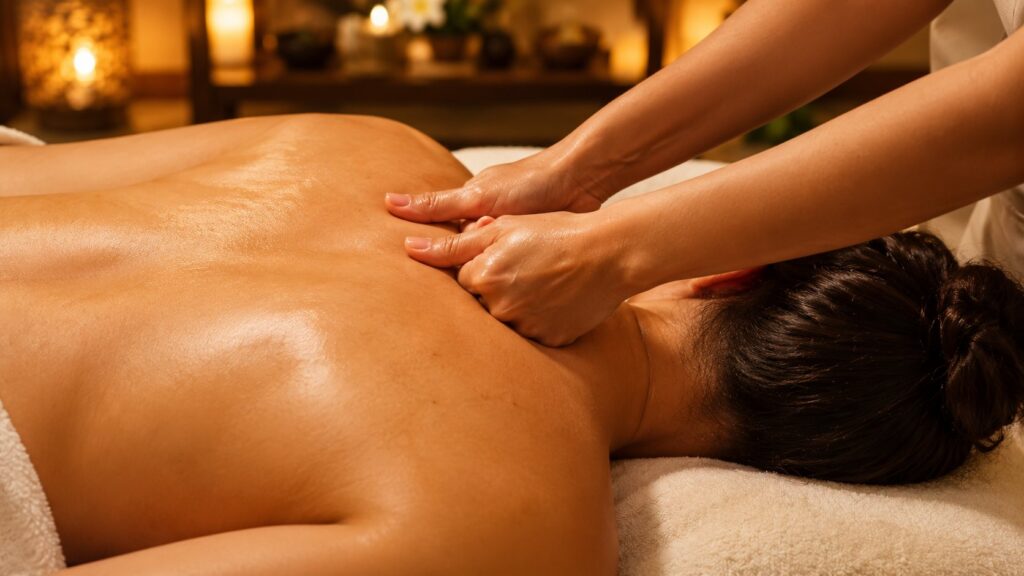

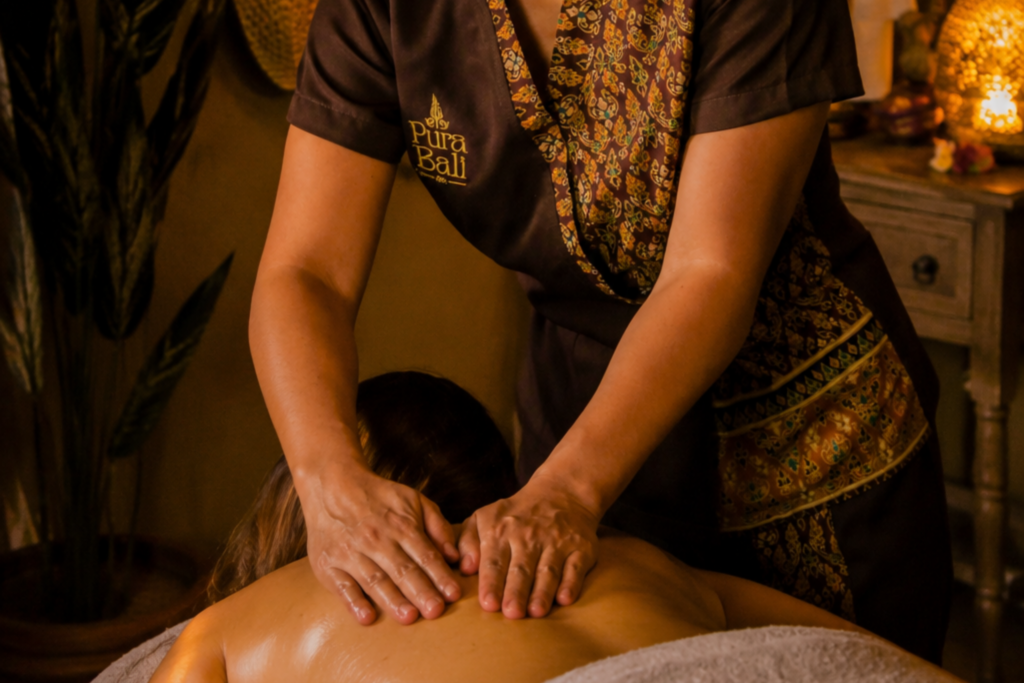
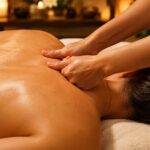
Balinese massage is a holistic body experience that combines pressure, fluid movements, gentle stretches, and aromatic oils to relax the body and calm the mind. Its balance of depth and gentleness makes it an ideal choice for releasing tension and disconnecting from daily stress.
But what exactly is a Balinese massage? What techniques does it use, and how does a session unfold?
What is Balinese massage
Balinese massage is a traditional Balinese therapy that combines pressure, fluid movements, kneading, and gentle stretching to relax the body and relieve tension. It is performed with aromatic oil and works on the body as a whole, promoting a deep sense of well-being and calm.
The Origins of Balinese Massage
Balinese massage originated in Bali, Indonesia, an island where physical well-being, spirituality, and a connection with nature are all part of the same philosophy of life. In Balinese tradition, massage is not viewed merely as a physical technique, but as a ritual aimed at restoring balance between body and mind.
Over time, this therapy incorporated influences from various Asian traditions, such as Ayurvedic medicine and certain practices of traditional Chinese medicine. From this combination emerged a massage that combines pressure, fluid movements, gentle stretches, and aromatherapy to offer a complete experience of relaxation and well-being.
Today, Balinese massage is one of the most popular treatments at spas around the world thanks to its ability to relieve physical tension, promote mental relaxation, and create a deep sense of calm.
What techniques are used in Balinese massage?
Balinese massage is known for its variety of techniques. It does not follow a single type of movement, but rather combines different maneuvers to adapt to the body and its needs.
This blend makes the massage thorough, pleasant, and deep all at once.
Long, fluid movements
One of the main characteristics of Balinese massage is its long, continuous strokes. The therapist glides their hands over the body with the help of oil, creating a sense of continuity and calm.
These movements help prepare the muscles, gently stimulate circulation, and help the body enter a state of progressive relaxation.
They also have a very significant effect on the mind. Because they are rhythmic and immersive movements, they help reduce feelings of alertness and direct attention to the present moment.
Muscle knots
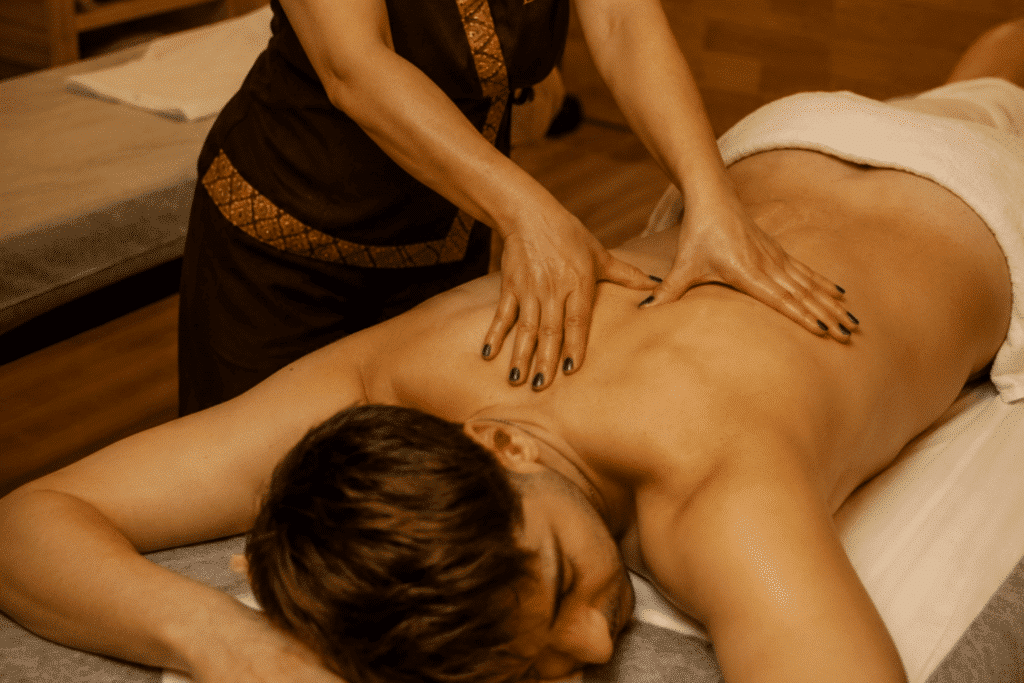
Kneading is a fundamental technique in Balinese massage. It involves working the muscles with pressure and release movements, as if “loosening” the tension accumulated in the tissues.
It is used especially in areas that tend to bear more weight, such as the back, shoulders, neck, legs, or lower back.
This technique helps relax muscles, relieve stiffness, and improve mobility. The pressure can be adjusted based on each person’s sensitivity.
Localized pressures
Balinese massage also involves applying pressure to specific points on the body. This pressure can be applied with the thumbs, palms, or forearms, always in a controlled manner.
The goal is to work on areas of deeper tension, especially when there are muscle knots or a feeling of stiffness.
Unlike a vigorous massage, the pressure in a Balinese massage should be applied gradually. The body needs time to relax. That is why the therapist guides the process without using force.
Friction and Circular Motion
Friction and circular movements help warm up the muscles and target denser areas of tissue.
They are typically used on areas such as the upper back, lower back, hips, legs, or shoulders. These movements help activate the area and prepare the body for deeper techniques.
They can also provide a sense of relief when tension has built up due to poor posture, stress, or physical fatigue.
Gentle Stretches
Although Balinese massage is not as vigorous as Thai massage, it may include gentle stretches to enhance the feeling of physical openness.
These stretches are performed passively; that is, the therapist guides the movement while the person remains relaxed.
The goal is not to force flexibility, but to help the body release stiffness and regain a sense of openness.
The Role of Oils in Balinese Massage
Oil is an essential part of Balinese massage, as it allows for long, fluid, and enveloping movements that make the experience much more relaxing. In addition to facilitating the manual technique, it provides a sensation of warmth, softness, and care for the skin.
Many Balinese rituals use aromatic oils with floral, herbal, or exotic notes that help create an atmosphere of calm and well-being. Aromatherapy complements the massage by promoting mental relaxation and making the experience more profound and sensory.
How to Give a Balinese Massage, Step by Step
Although each spa may tailor the session to its own style and the type of treatment, a Balinese massage typically follows a progressive structure. The idea is to prepare the body, work on areas of tension, and gently bring the experience to a close.
1. Welcome and Treatment Adjustment
Before beginning, the therapist may ask about pressure preferences, areas of tension, or specific needs. This part is important for tailoring the massage to each individual.
Not everyone comes to a session in the same condition. Some need more work on their back and shoulders. Others are looking for a more relaxing experience. And still others prefer gentle pressure because their bodies are particularly sensitive.
Personalization makes the massage more comfortable, safer, and more effective.
2. Physical Preparation
The session usually begins with gentle, sweeping movements. These initial movements help the body get used to the touch and begin to relax.
They also allow the therapist to sense where there is the most tension, stiffness, or tenderness. This is a phase of listening to the body.
The goal is not to go too deep right away, but to build confidence and prepare the muscles for the work that follows.
3. Deep work on the muscles
Once the body is prepared, the therapist can begin to apply deeper techniques.
This phase involves kneading, localized pressure, circular movements, and friction. The areas most commonly treated are the back, neck, shoulders, legs, and lower back.
The intensity is adjusted throughout the session. A good Balinese massage should not feel like a struggle against the body, but rather like a gentle guidance. There may be areas of more intense pressure, but always within a comfortable and tolerable range.
4. Enveloping movements and a steady rhythm
After the deeper work, the massage returns to long, fluid strokes. This alternation between intensity and gentleness is one of the hallmarks of Balinese massage.
The continuous rhythm helps integrate the work done and restores a sense of unity to the body. The person does not perceive isolated movements, but rather a complete experience.
Little by little, your breathing slows down, your muscles relax, and your mind enters a state of greater calm.
5. End of the session
The end of the massage is usually gentler and more unhurried. The therapist reduces the intensity and uses soothing movements to bring the experience to a close.
It is recommended that you get up slowly and allow your body to hold onto that sense of calm. After the session, many people feel light, at ease, and have a clearer mind.
It’s also common to notice that your skin feels softer thanks to the oil and to experience a general sense of relaxation.
Conclusion
Balinese massage is much more than just a sequence of movements. It is a holistic experience that combines technique, oil, rhythm, and sensitivity to help the body release tension and enter a state of calm.
Its origins in Bali, its blend of Eastern influences, and its approach to bodywork make it one of the most highly regarded massages in the world of premium wellness.
It is ideal for those seeking a relaxing, sensory, and deep treatment that relieves physical tension without sacrificing the delicacy of a spa ritual.
Because a good massage isn’t just felt in the muscles. You can also feel it in your breathing, in your mind, and in that sense of returning to your body with a greater sense of calm.