
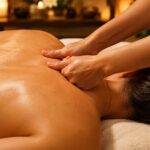
There are places in the world where time seems to stand still, where body and spirit are in perfect harmony. Bali is one of those places. This Indonesian island, known as the Island of the Gods, has preserved for centuries a way of understanding well-being that transcends the physical: a philosophy that lives on today in every Balinese massage session. It’s no coincidence that this ritual has crossed oceans and continents to find a home in the world’s finest spas.
Balinese massage is not simply a technique for muscle relaxation. It is the tangible expression of a culture that reveres the balance between the visible and the invisible, between tension and calm, between effort and rest. Generation after generation, Balinese healers—known as balian—have passed down their knowledge orally and through hands-on practice, giving this massage a depth that few other treatments can match.
Today, Balinese massage is one of the most sought-after treatments at spas around the world. Its popularity isn’t just a passing fad, but stems from genuine results: a sense of lightness, deep relaxation, and connection with oneself that is hard to achieve with other treatments. To fully understand it, you need to know where it comes from, how it’s practiced, and what makes it truly unique.
The Origins of Balinese Massage: A Tradition Born in Bali
The origins of Balinese massage date back several centuries to an island where spiritual, medicinal, and cultural traditions are inextricably intertwined. Unlike other forms of Asian massage, the Balinese technique does not stem from a single source, but rather from the convergence of multiple influences: Indian Ayurvedic medicine, Chinese healing practices, and the spiritual wisdom of Balinese Hinduism.
In Balinese culture, the human body is viewed as an energy system in which health depends on the free flow of vital energy. When that flow is blocked by stress, repressed emotions, or physical exertion, discomfort arises. Massage, therefore, was not merely a practice for comfort, but a therapeutic and spiritual act aimed at restoring the body’s balance.
This holistic concept of well-being, known as Tri Hita Karana, holds that human harmony depends on three pillars: the relationship with the divine, the relationship with other people, and the relationship with nature. Balinese massage is, at its core, a ritual that honors these three connections. Every movement, every oil, and every intention of the therapist is aimed at restoring that inner balance.
The history of Balinese massage also reflects Bali’s openness to the world. With the expansion of tourism and growing Western interest in Eastern therapies, this massage began to be exported during the final decades of the 20th century. Far from losing its essence, it adapted its format to the contemporary spa context while keeping its fundamental principles intact.
The Ancient Techniques of Balinese Massage
What sets Balinese massage apart from other forms of massage is its ability to integrate various techniques into a coherent and harmonious sequence. It is not about applying methods at random, but rather about creating an experience that gradually deepens and intensifies, adapting to the body’s needs at every moment.
Traditional Balinese Massage Techniques
Balinese massage techniques combine different therapeutic approaches that work simultaneously on muscle tissue, energy points, and joint mobility:
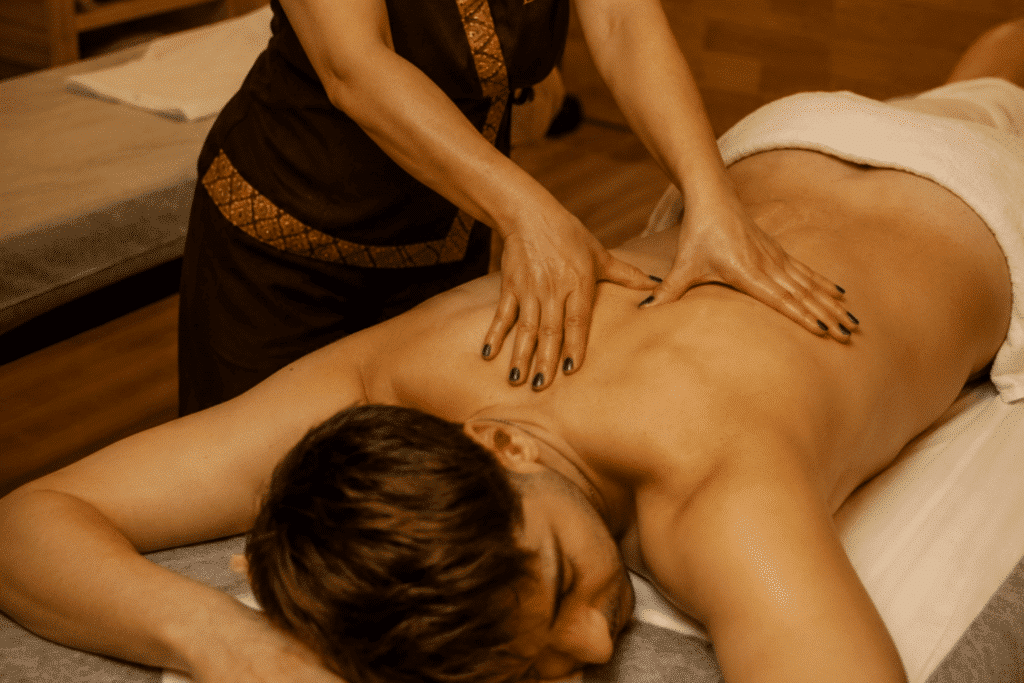
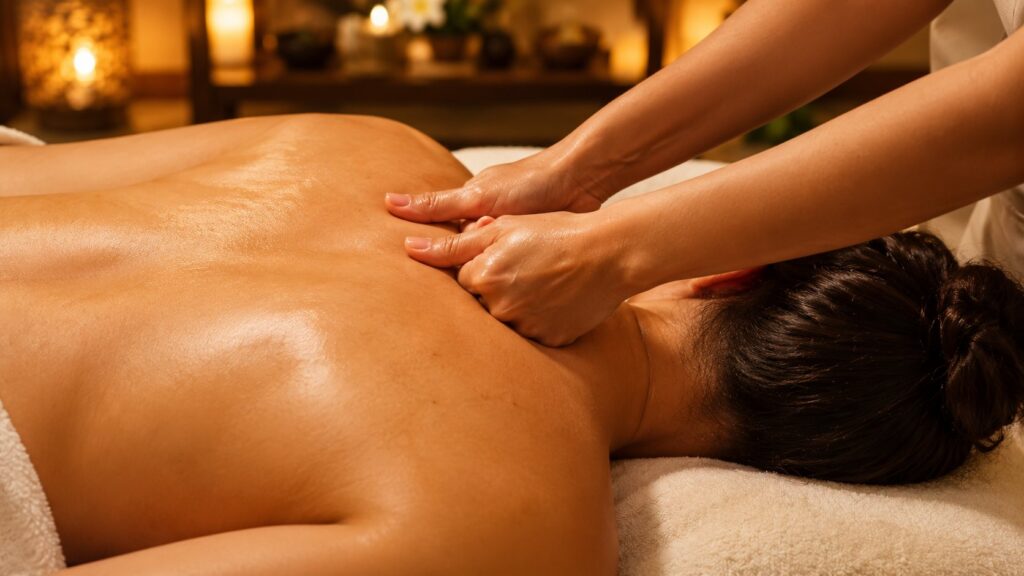
- Deep tissue massage: Using rhythmic, sustained pressure, the muscles are worked deeply to release muscle knots, tension nodules, and areas of accumulated stiffness. This type of massage is particularly effective for those who suffer from chronic tension in the neck, back, and shoulders.
- Acupressure: Based on the energy meridians of traditional Chinese medicine, the therapist applies pressure to specific points on the body to unblock the flow of energy and stimulate the body’s self-regulatory mechanisms.
- Reflexology: The feet contain a reflex map of all the body’s organs and systems. Stimulating these areas not only relieves local tension but also has a positive effect on the body’s overall balance.
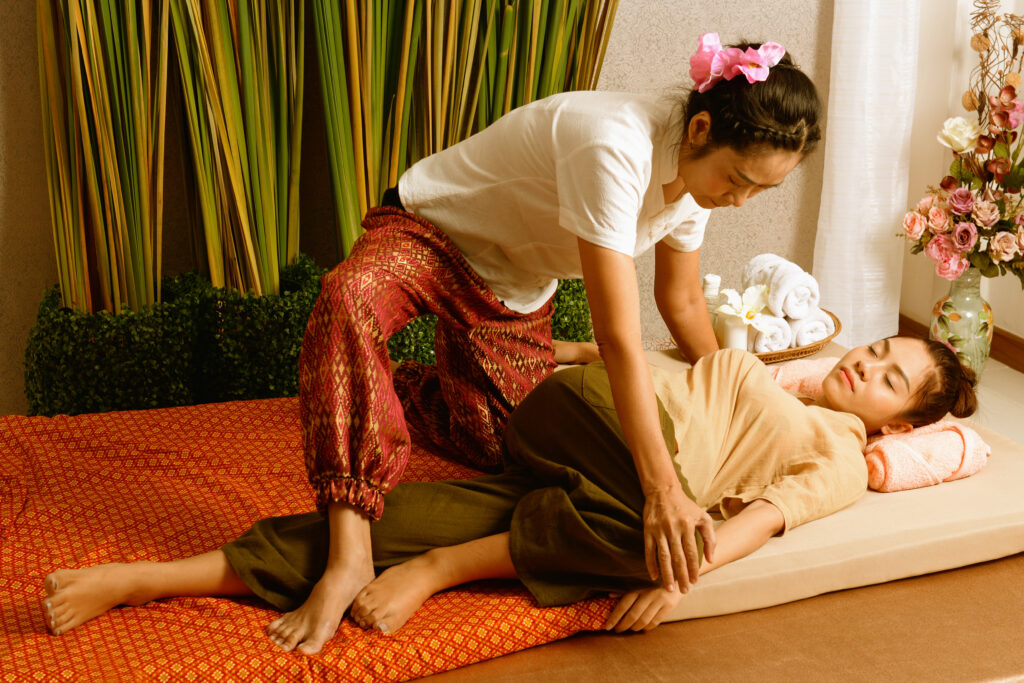
- Gentle stretches: At the end of the session, the therapist guides the body through gentle stretches and elongations inspired by yoga. These movements promote range of motion, relieve joint stiffness, and prolong the feeling of lightness.
Characteristic movements of Balinese massage
Beyond the techniques themselves, Balinese massage is recognized for the quality of its movements. It has a distinctive rhythm, a way of moving across the body that clearly sets it apart from other forms of massage:
- Long, fluid movements: gliding strokes cover large areas of the body, stimulating blood and lymphatic circulation while preparing the muscles for deeper work.
- Thumb pressure: one of the hallmarks of Balinese massage. The thumbs work with precision on the densest tissues, releasing tension points with firm but never abrupt pressure.
- Circular movements: Used primarily on joints, hips, and the lower back, these movements release accumulated stiffness and promote mobility in areas of high tension.
- Continuous rhythm: Perhaps the most defining element of Balinese massage is its continuity. There are no sudden interruptions or abrupt changes in intensity. The enveloping rhythm of the massage acts like a metronome, guiding the nervous system into a state of deep relaxation.
The Role of Oils in Balinese Massage
In Balinese tradition, oils are not merely a lubricant to help the hands glide over the skin. They are vehicles for well-being, bearers of therapeutic properties, and elements that connect the ritual with nature. The choice of oil is an intrinsic part of the treatment.
Oils Used in Balinese Massage
The base oils used in Balinese massage come from plants grown on the island itself or in nearby areas, which reinforces their connection to the philosophy of harmony with nature:
- Coconut oil: Extracted using traditional methods, it is the region’s most iconic oil. Highly nourishing, it absorbs easily into the skin, leaving it soft and deeply moisturized. Its light texture makes it ideal for long massages.
- Sesame oil: Used since ancient times in Ayurvedic medicine, it has soothing and antioxidant properties. It promotes circulation and provides natural warmth to the tissues, which enhances the treatment of deep muscles.
- Almond oil: gentle, emollient, and rich in vitamin E, it is especially prized for its ability to nourish sensitive skin. Its delicate aroma and silky texture make it an ideal complement to more intense essential oils.
Essential Oils and Balinese Aromatherapy
The olfactory aspect of Balinese massage is just as important as the physical work. The aromas do more than simply scent the room: they act directly on the limbic system—the part of the brain associated with emotions and memory—inducing states of calm, joy, or deep serenity:
- Ylang-ylang: Its sweet, floral scent is known for its anxiety-relieving properties. It lowers the heart rate, balances emotions, and creates an atmosphere of intimacy and warmth.
- Jasmine: a symbol of purity in Balinese culture, where its flowers adorn temples and offerings. Its fragrance lifts the spirits, relieves mental fatigue, and adds a spiritual dimension to the treatment.
- Sandalwood: Its warm, earthy aroma acts as a sensory anchor, promoting meditation and a state of inner stillness. It adds depth and longevity to the aromatic experience.
- Ginger: stimulating and invigorating, it boosts circulation and provides an energy boost during sessions that aim to combine relaxation with revitalization.
The combination of these essential oils with carrier oils creates synergies that enhance the effects of the massage. Balinese aromatherapy is never improvised: each blend serves a specific therapeutic purpose, making every session a complete sensory experience.
Why These Techniques Make Balinese Massage Unique
There are dozens of types of massage around the world, but few manage to integrate so many levels of action simultaneously. Balinese massage works on the physical body—releasing muscle tension and improving circulation—but it also addresses the energetic and emotional aspects of the person.
The combination of Eastern traditions—Ayurvedic medicine, Chinese acupressure, yoga, and Hindu spirituality—results in a therapeutic system that addresses the whole person. It’s not just about massaging a tight muscle; it’s about restoring the flow of energy throughout the entire body.
The deep muscle work that characterizes Balinese massage sets it apart from purely relaxing massages. It is a treatment that works at a deep level, capable of addressing chronic issues without sacrificing the gentleness and fluidity that make it so enjoyable.
Finally, the spiritual dimension of Balinese massage adds an element that few other treatments possess: intention. The therapist is not a mechanical performer, but rather a facilitator who accompanies the body in its process of release. That quality of presence—of mindfulness—permeates the entire session and transforms a massage into a transformative experience.
How to Enjoy an Authentic Balinese Massage Experience at a Spa
Understanding how a Balinese massage is performed in a contemporary spa setting helps you arrive with the right expectations and make the most of every minute of the treatment. From the very first moment, the atmosphere is designed to calm the nervous system: soft lighting, enveloping aromas, the ideal temperature, and music that mimics the sound of water or Balinese sound rituals.
The session usually begins with a welcome period during which the therapist may ask about areas of tension, pressure preferences, or any relevant physical conditions. Next, the chosen oil is applied, and the massage begins on the back, working from the areas of greatest muscle density toward the extremities.
A full session typically lasts between 60 and 90 minutes, although some spas offer extended treatments lasting up to two hours that include body scrubs, body wraps, or aromatic baths beforehand. This duration allows the therapist to treat the entire body with the necessary attention to detail, without rushing, and taking the time each area requires.
The sensations it produces are difficult to describe precisely: a sort of gradual softening of the tissues, a noticeable reduction in tension, and, often, a pleasant drowsiness that indicates the nervous system has entered a state of deep repair. When the session ends, it’s common to feel lighter, with greater range of motion and an inner calm that lasts for hours.
Conclusion
Balinese massage is much more than a wellness technique exported from an exotic island. It is the essence of centuries of wisdom about the human body, expressed through expert hands, sacred oils, and a genuine therapeutic intent. Its value lies not only in what it does for the muscles, but in what it suggests about our relationship with our bodies, with rest, and with ourselves.
In a world that glorifies speed and hyperactivity, this massage invites you to pause. To feel. To reconnect with a dimension of well-being that cannot be measured or quantified, but that is immediately recognizable when experienced. Perhaps that is why its global popularity has continued to grow: because it responds to a deep and universal need.
Learning about the origins of Balinese massage, understanding its techniques, and grasping the role of the oils used in it is not just an intellectual exercise. It is a way to approach the session with greater awareness, to experience each movement not as something being done to the body, but as a dialogue between two people aimed at restoring balance. A dialogue that, in Bali, has been essential for centuries.