
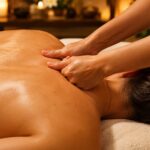
If you’re torn between a relaxing massage and a deep-tissue massage, the key question is where the problem lies. If you feel it throughout your entire body—in the form of fatigue, mental exhaustion, or poor sleep—a relaxing massage is the right choice for you. If you feel it in a specific spot that hurts when touched—such as your neck, trapezius muscles, or lower back—you should opt for the deep-tissue massage. That’s the most important factor to consider when making a reservation.
In this article, we explain how these two types of massage differ, the benefits of each, and what the research says. We also include a three-question quiz to help you choose, a comparison with other types of massage they’re often confused with, and what to expect during your first session.
In summary
- The relaxation massage lowers the body’s overall arousal level using gentle to moderate pressure. The deep-tissue massage targets specific trigger points with firm pressure.
- Studies show that deep-tissue massage provides short-term relief from lower back and neck pain.
- Both techniques can be combined in a single session if you let your therapist know.
- If you have certain medical conditions, it’s best to consult your doctor first.
What is the difference between a relaxing massage and a deep-tissue massage?
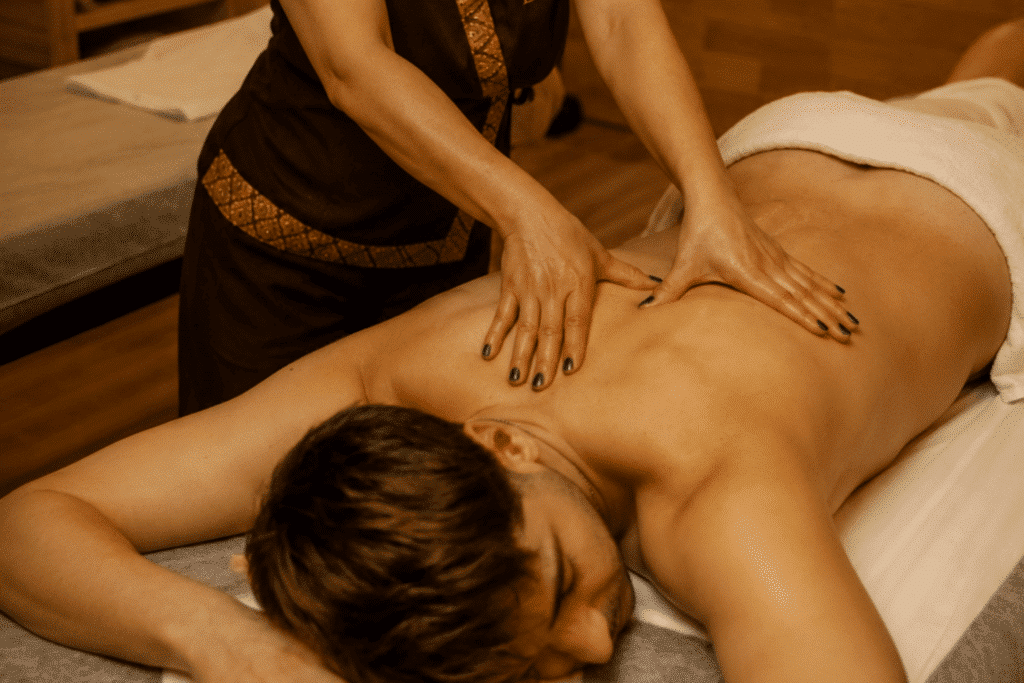
The relaxation massage focuses on how you feel overall: it lowers your arousal level through slow movements throughout the body and gentle to moderate pressure. The deep-tissue massage targets a specific muscle: firm, sustained pressure is applied to the neck, trapezius muscles, or lower back until the tension point releases. The former covers the entire body; the latter focuses on the affected area.
| Relaxing Massage | Deep Tissue Massage | |
|---|---|---|
| Objective | Lower the general alert level | Relieve localized muscle tension |
| Pressure | Light to moderate, constant | Firm and sustained at specific points |
| Technique | Long, rhythmic strokes, using oil | Deep kneading, friction, and sustained pressure |
| Area | Full Body | Neck, trapezius muscles, upper back, and lower back |
| Feeling | Pleasant from start to finish | Occasional, tolerable discomfort in areas of greatest tension |
| It is chosen when | You’re feeling generally tired, stressed, or having trouble unwinding | There is a tender spot that hurts when pressed or stiffness that does not subside with rest |
A "relaxing" massage is often associated with gentle pressure, while a "deep-tissue" massage is associated with intense pressure. This is a useful guideline, though it doesn't always hold true. A deep-tissue massage can be quite gentle if it’s your first time, and a relaxing massage can involve moderate pressure without focusing on any one spot. What sets one apart from the other is where the focus lies.
What they have in common are the hands, the oil, the massage table, and a therapist who adjusts the pressure. Neither provides a medical diagnosis nor replaces a doctor’s visit. If you’d like to see how they fit into the menu of a Balinese-inspired spa, check out our Balinese massages in Barcelona.
What are the benefits of a relaxing massage?
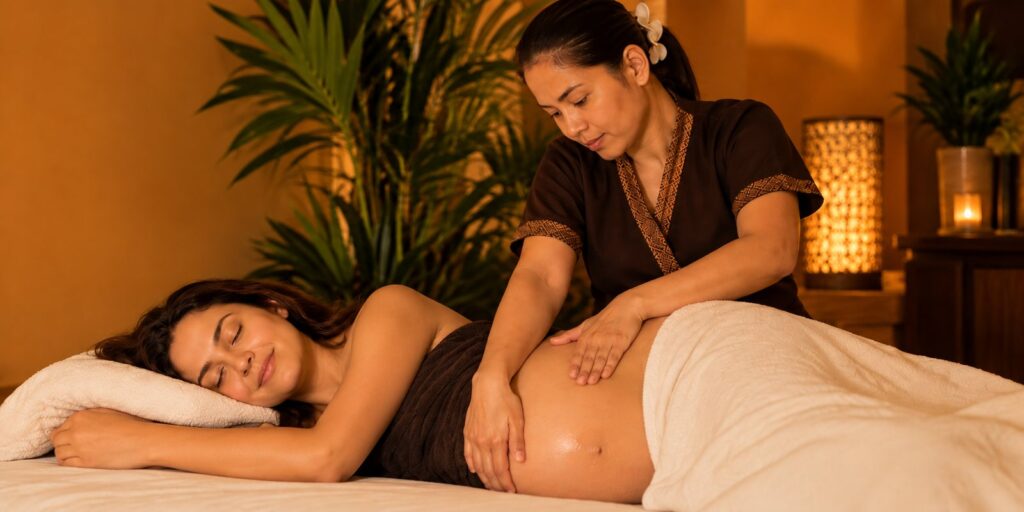
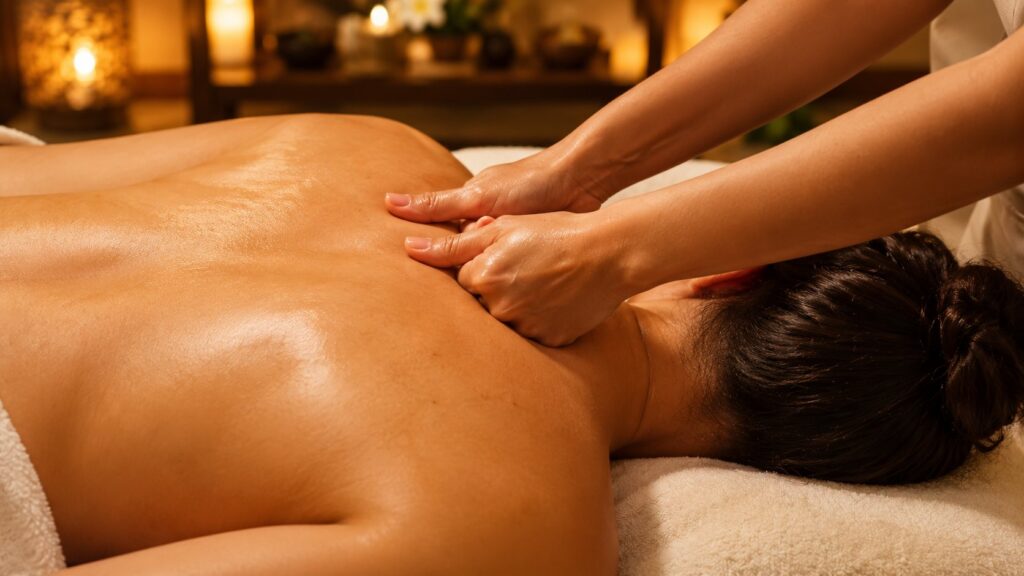
The relaxing massage is designed to lower the body's arousal level and leave you feeling calm at the end of the session.
Stress and Anxiety
The slow pace and gentle pressure help you unwind and reduce feelings of accumulated stress. Many people incorporate it into their regular routine to maintain that sense of calm.
Rest
It's common to fall asleep during a session, and the feeling of calm helps you unwind at the end of the day. If sleep problems persist for weeks, you should also consult your doctor.
At Pura Bali, you can enjoy a relaxing aromatherapy massage and a relaxing shea butter candle massage.
What are the benefits of a deep-tissue massage?
Deep-tissue massage relieves muscle tension points and reduces discomfort in the treated area. Cochrane reviews on low back and neck pain report short-term improvements in pain.
Lower Back Pain
A 2015 Cochrane review found that, compared with no treatment, massage improved pain and mobility in the short term. No serious adverse effects were reported.
Neck Pain
The Cochrane review on neck pain reported a 24% reduction in pain after massage compared to no treatment.
What to Expect
After the session, you’ll usually feel relief in the treated area.
If, in addition to neck and shoulder tension, you experience frequent headaches, the massage can help relieve the area, although it’s a good idea to check with your doctor as well.
If that’s what you’re looking for, book Pura Bali’s deep-tissue massage.
Which One Is Right for You? A Three-Question Quiz
To choose between a relaxing massage and a deep-tissue massage, answer three questions: where do you feel the tension, how long have you had it, and what happens when you press on the area? If the discomfort is diffuse and recent, a relaxing massage is the right choice. If it’s in a specific spot and doesn’t go away with rest, a deep-tissue massage is the right choice.
| Question | If you answer this, it's relaxing | If you answer this, it's muscle-relaxing |
|---|---|---|
| Where do you feel it? | All over your body or as mental fatigue | In one specific area: neck, shoulder, lower back |
| Since when? | A few very busy days | Weeks, and it doesn't go down even when you rest |
| What happens when you press it? | There's no spot that hurts | There's a hardened area that hurts |
A muscle spasm usually feels like a hard spot when touched, almost always appears in the same area, and can limit neck movement. This is a clue, not a diagnosis.
Tip: If the pain is severe, occurred after an injury, or is accompanied by tingling or loss of strength, do not get a massage on your own. Consult a doctor or physical therapist first.
If your answers are split between the two columns—which is the most common scenario—you can combine both massages, as explained below.
Can a relaxing massage and a deep-tissue massage be combined in the same session?
Yes, you can combine them: you start by slowing down the pace so your body relaxes, and then you work on the areas of tension—or vice versa. The important thing is to tell the therapist what you're looking for before you start, because the session is limited in time and doesn't allow for everything to be covered.
It's most helpful to explain it in concrete terms, for example: "I'm feeling generally tired and have muscle tension in my right trapezius." With that statement, the therapist knows what to prioritize. The shorter the session, the more sense it makes to choose a single goal.
As for frequency, there's no single rule. Centers make different recommendations, ranging from one maintenance session a month to several sessions in a row when you first start, and it depends on how long you've had the tension and your daily routine. The therapist will advise you after assessing the area.
Tip: If this is your first time, ask for the pressure to be applied gradually, and let them know as soon as you feel yourself tensing up.
Are they similar to other massages that are often confused with them?
The types of massage most often confused with these two are sports massage, deep-tissue massage, therapeutic massage, and Swedish massage. They are similar in terms of hand techniques and the massage table, but not in their purpose: some prepare or help athletes recover, others work on deep tissue layers, and others are terms that each center defines in its own way.
| Massage | What people usually look for | It's more like |
|---|---|---|
| Sports | Preparing or recovering muscles after exercise | Muscle Relaxant |
| Deep Tissue | Slow, intense pressure on deep muscle layers | Muscle relaxation, intense version |
| Therapeutic | Broad definition: some centers use it to treat an injury, others as a synonym for muscle relaxation | It depends on the center |
| Swedish or Classic | Full-body relaxation with long, flowing strokes | Relaxing |
It’s always a good idea to ask what each name entails at that specific center, because the name alone doesn’t tell you everything.
If you’re interested in stretching or pressure on specific points, there’s another type of massage. Traditional Thai massage uses stretching and acupressure, while Japanese shiatsu focuses on pressure on specific points. If you’re comparing techniques, check out the comparison between Balinese and Thai massage.
What to Expect During Your First Session and What to Do Before and After?
During your first session, tell the therapist where it hurts, how long you’ve been experiencing the pain, and what you hope to achieve. Let them know about any medical conditions you have, and ask for less pressure if you feel yourself tensing up. Afterward, drink water, avoid strenuous activity that day, and keep in mind that it’s normal for the area to feel tender for a few hours.
Before
- Arrive a few minutes early and explain what you’re looking for in a single, specific sentence.
- Mention any recent surgeries, injuries, blood-thinning medication, and any relevant medical conditions.
During
- You shouldn't feel any discomfort during the relaxation session. If you do, let the therapist know.
- During the deep-tissue massage, you may feel occasional discomfort at the areas of greatest tension. It should be tolerable, and you can ask for less pressure at any time.
Afterward
- Stay hydrated: It's a good habit to follow after any workout.
- Avoid intense workouts or lifting weights that day.
- It’s normal for the area to feel a little tender for a few hours. If the pain gets worse or doesn’t go away within a couple of days, consult a professional.
If you want to know how time is allocated during a Balinese massage session, we explain it in “How Long Does a Balinese Massage Last and What to Expect.”
Relaxing and Deep-Tissue Massage at Pura Bali Spa
At Pura Bali Spa, located at 157 Josep Tarradellas Avenue in Barcelona, the menu features one deep-tissue massage and two relaxing massages: the aromatherapy massage and the shea butter candle massage. You can choose based on what you’ve read here or let us know what you need when you arrive.
- Deep Tissue Massage
- Relaxing Aromatherapy Massage
- Relaxing Massage with Shea Butter Candle
- Balinese massage, the line that gives the center its name
If you're interested in the Balinese massage approach to stress and muscle tension, check out " Balinese Massage for Stress and Muscle Tension."
Frequently Asked Questions
Which is better, a relaxing massage or a deep-tissue massage?
It depends on where the problem is. If you’re generally tired, go for the relaxing treatment. If there’s a tense spot that hurts when pressed and doesn’t ease with rest, go for the muscle-relaxing treatment. If you have both issues, you can combine them in one session—just let the therapist know.
Does a deep-tissue massage hurt?
You may experience occasional discomfort at the points of greatest tension, but it's always tolerable. You can ask for less pressure at any time.
Can a relaxing massage and a deep-tissue massage be combined?
Yes. You can start gently and then work on the tense areas, or vice versa. Tell the therapist exactly what you're looking for. For short sessions, it's best to choose just one goal.
Which type of massage is best for back pain?
If the pain is localized to a specific spot, a muscle relaxant is usually effective; according to Cochrane reviews, it provides short-term relief from lower back pain. If the pain is persistent, it is also advisable to consult a doctor.
Which type of massage is best for stress and anxiety?
The relaxing massage, because it works on the entire body at a slow pace that helps you unwind. If anxiety is persistent, a massage can be a helpful complement, but it is not a substitute for a healthcare professional.
How often should you get a deep-tissue massage?
There’s no one-size-fits-all answer. It depends on how long the tension has been present and your daily routine. The therapist will advise you after assessing the area. As a general rule, if the pain worsens or doesn’t improve, consult your doctor.
What is the difference between a deep-tissue massage and a therapeutic massage?
Each center defines the terms itself. Some use "therapeutic" to refer to more clinical work on a specific injury, while others use it as a synonym for "muscle relaxation." Ask what the session includes before booking.
Sources and References
- Furlan, A. D., Giraldo, M., Baskwill, A., Irvin, E., and Imamura, M. (2015). Massage for low-back pain. Cochrane Database of Systematic Reviews, 2015(9), CD001929.
- Gross, A. R., Lee, H., Ezzo, J., et al. (2024). Massage for neck pain. Cochrane Database of Systematic Reviews, 2024(2), CD004871.
Find the massage you need
At Pura Bali, you’ll find more than ten different massages, ranging from relaxing aromatherapy to deep tissue, including Balinese, hot stone, and shiatsu. Learn more about each one and choose the one that best suits your needs.